
DUMBOTRON GAMES BLOG - DICE GAMES, EXPLAINED SIMPLY
Best dice games for family game night: what to look for
The best ones teach fast, play fast, and keep the whole table in it.
- BY KEVIN BONANNO
- NOVEMBER 10, 2026
- 6 MINUTE READ
The short answer
The best dice games for family game night are not always the ones with the most dice, the most rules, or the biggest box. They are the ones everybody at the table can actually get into.
A good family dice game teaches fast, plays fast, keeps everybody involved even when it is not their turn, and gives people a reason to talk, laugh, and root for or against the next roll. If a game needs a long rule explanation before anyone touches a die, it is probably not the one you want after dinner with mixed ages and mixed attention spans.
That sounds simple, but it rules out a lot of games. Here is what I look for.
1. You can teach it in a couple of minutes
Family game night falls apart in the teach. One person is reading rules out loud, one person is on their phone, one kid is rolling dice off the table, and by the time the first real turn starts, half the table has checked out.
The dice games that work best start with one clear idea. Roll, decide, score. You can explain the core in a couple of minutes, play one practice round, and everybody is in. More depth can show up as you play. It should not be required before you start.
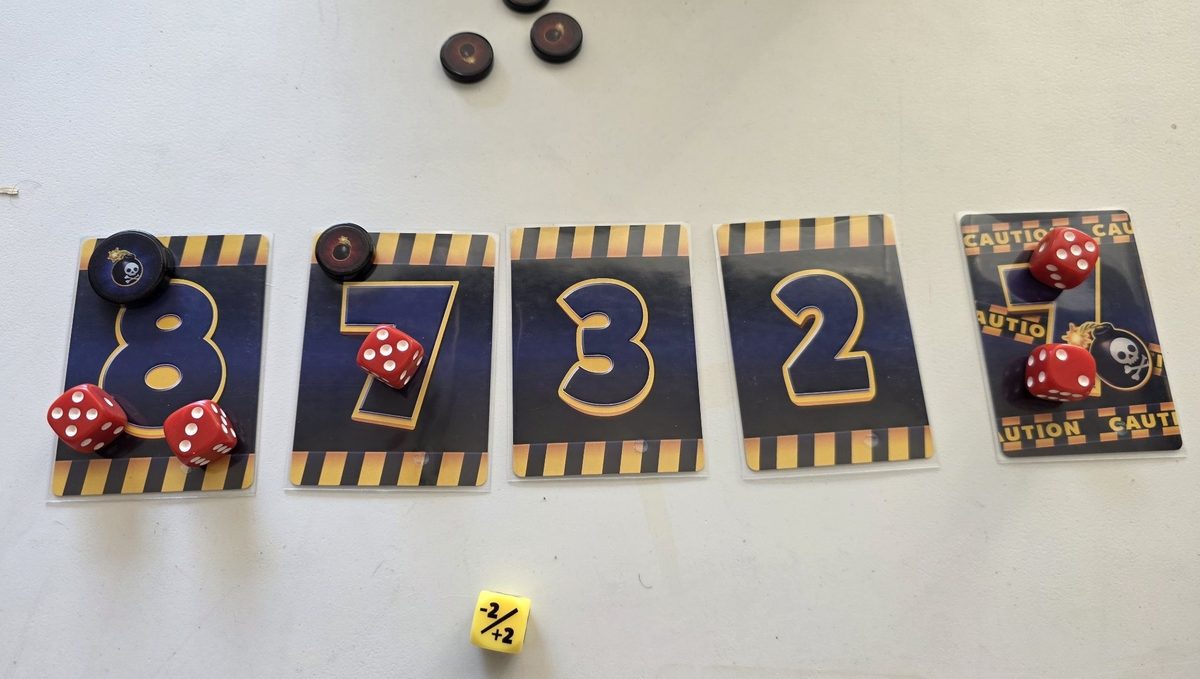
That is one of the things I kept front and center when I designed DeFuZion! Wild Dice. Five cards are dealt face up in a shared Active Row. You roll five standard dice plus the Wild Die, you get rerolls to fix what you can, and you assign your dice to the cards. Close counts, and you can see the price of every choice. Most people understand the whole game within a single round.
2. Turns are quick, and nobody sits out for long
Nothing kills a family game faster than downtime. If one turn takes five minutes and there are six people playing, somebody is waiting a long time between decisions, and waiting is not playing.
Look for short turns and, even better, a game where the other players care about your turn. Push your luck games are great for this. When somebody decides whether to roll again, the whole table has an opinion, and they are rarely quiet about it.
DeFuZion plays in about 15 minutes, for 2 to 6 players, ages 10 and up. You start with 100 FuZe, damage comes off that total, and you want the highest FuZe left when the round finishes. Even on somebody else's turn, you are still watching the same shared row of cards you just had to solve, so you stay in it between your own turns.
3. Luck gives everybody a chance, decisions give it a point
Pure luck gets old fast, because nobody really did anything. Pure strategy can be just as rough at a family table, because the most experienced player wins every time and everybody else knows it by game two.
The sweet spot is in the middle. The dice decide what you are offered. You decide what to do with it.
In DeFuZion, scoring is the distance between a card and the total of the dice you put on it. A card showing 9 with dice adding up to 7 costs you 2 damage. An exact match costs nothing. Leave a card uncovered and it scores against a total of 0, so it costs the full 9. Bomb cards are the exception. A bomb needs an exact total, and missing it costs 40 damage either way. So every turn is a real decision: chase the bomb, cover everything else close, or play it safer and take a smaller hit.
A younger or newer player can still have a great roll. A more experienced player still has something to think about. That balance is what keeps a family table coming back for one more game.
4. The table talk is part of the game
The games my family remembers are rarely the quiet ones. They are the ones where somebody talked themselves into one more roll, somebody else called it, and the dice settled the argument.
Dice are perfect for that. A roll is public. Everybody can see it land. Everybody knows what it means, or what it almost meant. You do not need hidden information or a big twist to get a reaction out of a table, you just need a moment where the outcome is not decided yet and everybody can see it coming.
If a dice game leaves your table silent, it is missing the point, no matter how clever the scoring is.
5. It fits the night you actually have
Be honest about your table. How many people are really playing? How old is the youngest player who actually wants in? How much time do you have before people start to fade?
A great family dice game should fit on a normal table, set up in minutes, and finish before it wears out its welcome. Short does not mean shallow. A 15 minute game that gets played three times in a night beats a two hour game that gets played once a year and argued about every time it comes out.
And if your group does love longer strategy games, a short dice game still earns its spot. It is the opener while people are arriving, or the closer when brains are tired but nobody wants to go home yet.
A quick checklist before you buy
Ask these five questions:
1. Can I teach it in a couple of minutes?
2. Does a full game finish in under 30 minutes?
3. Is everybody watching on other players' turns?
4. Can a new player win, and can a good player still make better decisions?
5. Does it work with the number of people we actually have, not the number we wish we had?
If the answer is yes to most of those, you probably have a family game night winner, whatever the theme is.
Try DeFuZion free, right now
You do not have to take my word for any of this. The DeFuZion solo demo runs in your browser, free, with no signup and no download. Play a few rounds and see if your table would get into it.
Play the free demo Follow DeFuZion on Kickstarter
And if you want the full rules, the Wild Die explained face by face, and the variants, they are all on the DeFuZion page.
Quick questions
What age are dice games good for on family game night?
It depends on the game, not the dice. Look at the age on the box and how much reading and adding the game asks for. DeFuZion is ages 10 and up, and the Long Fuse variant in the rules, where bombs deal 30 damage instead of 40, makes for a longer, gentler first game.
How long should a family dice game take?
For most family tables, under 30 minutes is the sweet spot, and shorter is often better. DeFuZion takes about 15 minutes, so you can play a rematch while everybody still wants one.
How many players should a family dice game handle?
Look for a range that matches your real table. DeFuZion plays 2 to 6 players, so it works for a quiet night with two and for a fuller table when more people show up.
That is what I look for, and that is the kind of game I tried to build. DeFuZion! Wild Dice comes to Kickstarter in April 2027. Join the launch list below and I will send you three short welcome emails when you join, then one email on launch day, and nothing else unless you ask for it. Launch list members who join before launch and back a game tier get a free playmat packed with their game. If you need anything else, let me know.
Kevin, Founder, Dumbotron Games